
Cryptocurrency Payments Moving Towards Enterprise Applications
Rising pressure on cross-border payments is prompting businesses to re-evaluate settlement methods.
Against the backdrop of the ongoing evolution of the global digital economy, payment systems are becoming an increasingly crucial element in the international development of enterprises. Especially with the continuous growth of cross-border e-commerce, digital content, and online services, the limitations of traditional payment systems in terms of efficiency, cost, and coverage are becoming increasingly apparent, prompting more and more companies to rethink payment methods themselves.
World Bank data shows that a traditional cross-border remittance takes an average of 2 to 5 business days to complete, with overall transaction fees often exceeding 5%. For companies with frequent transactions and high requirements for payment cycles, these costs accumulate over time, directly impacting cash flow efficiency. It is against this backdrop that cryptocurrency payments are gradually moving from a technological concept to more practical enterprise applications.
The Real-World Foundation for Cryptocurrency Payments is Taking Shape
Unlike traditional cross-border settlements, cryptocurrency payments operate on blockchain networks, completing value transfers without relying on the banking clearing system. This characteristic gives it a natural advantage in cross-border business.
A report by blockchain analytics firm Chainalysis indicates that the number of global cryptocurrency holders has exceeded 420 million, with a significant proportion residing in emerging markets such as Southeast Asia, Latin America, and Africa. These regions generally suffer from insufficient banking coverage, yet the usage of digital wallets continues to rise, providing a real and stable environment for cryptocurrency payments.
As the stablecoin system matures, the volatility risk of cryptocurrencies in payment scenarios has significantly decreased, making them more suitable for enterprise-level settlements.
Enterprise applications are moving from "trial" to "supplement."
In actual business scenarios, many companies targeting overseas markets have come to regard cryptocurrency payments as an important supplement to traditional payment systems. Some companies providing digital services and subscription products have seen a significant increase in payment success rates for their emerging market users after integrating stablecoins such as USDT and USDC, while also reducing order losses due to credit card failures and channel restrictions.
Compared to traditional cross-border transfers, stablecoin payments have shorter paths and faster arrival times, and to some extent, reduce the uncertainty caused by exchange rate fluctuations. This has led businesses to increasingly view cryptocurrency payments as an "efficiency-enhancing" tool rather than a high-risk asset.
From Payment Tool to Value Connection Method
It's worth noting that the impact of cryptocurrency payments extends beyond the payment receiving stage. As payments begin to occur on-chain, the way businesses connect with customers and partners for value also changes.
Some international digital content platforms have begun using cryptocurrencies to settle revenue with creators worldwide. Compared to traditional international remittances, this settlement method can shorten the processing time from several days to minutes, significantly improving operational efficiency and enhancing the stability of cooperation between platforms and creators.
Payment is thus evolving from a single transaction into a value channel connecting multiple participants.
Traditional Institutions Enter the Market, Industry Perceptions Are Changing
In recent years, the exploration of traditional financial institutions in this field has also been driving a shift in industry perceptions. Visa has tested the use of USDC for clearing in some settlement scenarios, and PayPal has launched payment-related services based on stablecoins.
These practices send a clear signal: cryptocurrency payments are gradually extending from an internal tool within the crypto industry to the real-world business system, and their role is beginning to resemble that of a fundamental payment capability.
How Can Enterprises Implement Crypto Payments Under Controllable Conditions?
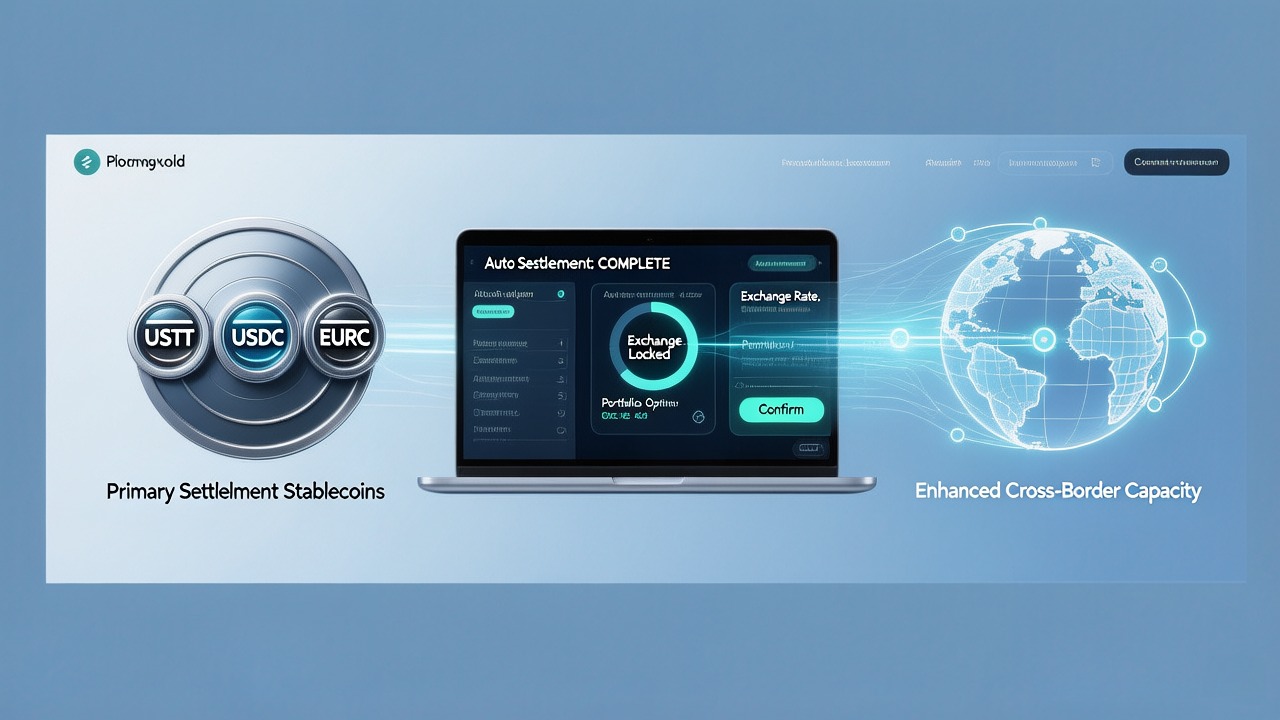
From practical experience, the most mature approach currently is to use stablecoins as the primary settlement medium, integrating them with professional payment platforms to achieve automatic reconciliation, currency exchange, and fund management.
In this model, enterprises do not directly bear the risk of price fluctuations but instead use cryptocurrency as a highly efficient settlement channel, thereby enhancing cross-border payment capabilities under controllable conditions.
Changes in Payment Methods Are Reshaping the Structure of Value Circulation
From a longer-term perspective, the significance of cryptocurrency payments lies not in replacing the traditional financial system, but in supplementing areas it has not yet efficiently covered.
For enterprises with a high proportion of cross-border business, it provides a more flexible and globally adaptable option; and from the perspective of the digital economy as a whole, it is driving the transformation of value circulation methods from highly centralized clearing structures to technology-driven settlement networks.
Finally, as stablecoin mechanisms mature and regulatory frameworks become clearer, cryptocurrency payments are increasingly meeting the conditions for large-scale application. In the future, it may no longer be seen as an "innovative attempt" but will become a regular component of enterprise payment systems.
When payments truly become globalized and digitalized, they will not only improve efficiency, but may also change the way companies participate in global value networks.


.svg)
