
How Can Stablecoins Become Digital Cornerstone Financial
The ultimate goal of financial inclusion is not simply to increase the number of accounts, but to empower everyone with the dignity and ability to take control of their own economic lives. Stablecoins, with their unique characteristics of stability, programmability, and global accessibility, are becoming a crucial digital cornerstone for achieving this goal.
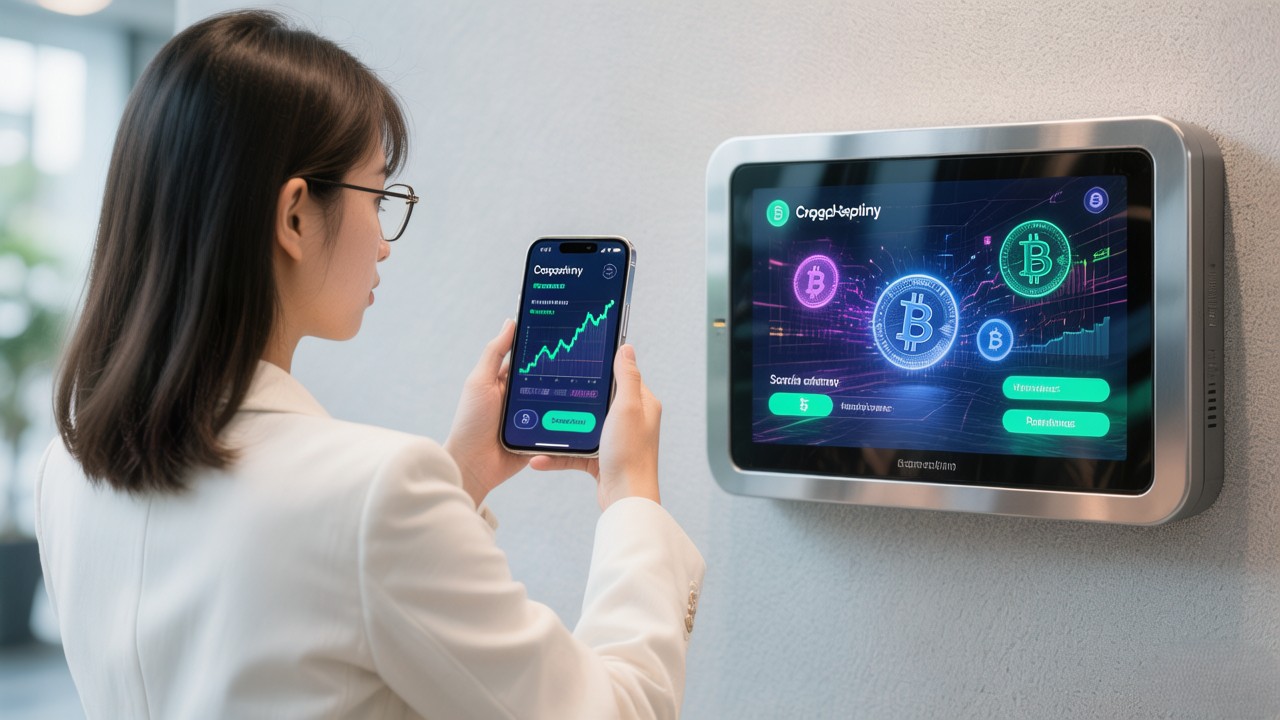
World Bank data from 2021 revealed a problem: in an era of accelerating global digitalization, 1.7 billion adults remain trapped outside the formal financial system. These "unbanked" individuals face more than just a lack of an account; they are isolated from the core of modern economic life. However, when we look at remittance windows in Manila, aid distribution points in Kyiv, or small business counters in Nairobi, we find an alternative based on blockchain and stablecoins taking root. This is not merely a technological experiment, but a fundamental reshaping of infrastructure concerning economic dignity.
I. A New Language of Credit Assessment: When Behavioral Data Begins to "Speak"
The traditional financial system acts like a meticulous but conservative archivist, relying on paper documents, fixed addresses, and long credit histories. This system inadvertently shuts out hundreds of millions of people lacking a "standard resume"—they lack formal pay stubs, their land may belong to their families rather than themselves, and they may not even possess a government-issued identity card.
Stablecoins and their underlying blockchain technology introduce a new grammar of credit: on-chain data proof based on behavior. Imagine a motorcycle driver in Southeast Asia who receives fares daily (settled in stablecoins) through a digital wallet, sends remittances to his mother back home weekly, and regularly tops up his mobile phone. These frequent, small, and timely on-chain transactions themselves continuously build a digital footprint far more convincing than a blank credit report. His financial credit is no longer defined by a document he cannot access, but dynamically depicted by his day-to-day economic behavior.
How does this work in practice? In the Philippines, mobile wallets like GCash partner with Circle, allowing users to directly hold and transfer USDC stablecoins. For millions of overseas Filipino domestic helpers, this means remittance costs have plummeted from a staggering percentage to almost negligible, with funds arriving instantly. In 2022, remittances flowing into the Philippines through such digital channels saw significant growth, with reports from the Philippine Central Bank and Circle confirming cost savings of over 90%. In Africa, similar applications are helping farmers obtain loans using expected harvests (represented through tokenization) as collateral, bypassing the rigid requirements of proof of land ownership. This naturally raises a crucial question: how to begin without an ID card? The answer lies in the layered application of technology. For low-risk, small-amount inclusive financial services, lightweight verification combining biometrics, device fingerprints, and telecommunications data is sufficiently reliable. This doesn't lower security standards, but rather shifts the focus of verification from "whose documents you have" to the more fundamental dimension of "you are your behavior." The World Bank's "ID4D" initiative is also working to build the digital identity infrastructure for such innovations.
II. Programmable Money: The "Lego Blocks" of Financial Services
One of the core breakthroughs of stablecoins is their "programmability." Through smart contracts, they transform from static payment tools into dynamic building blocks for financial services. This characteristic allows financial services to be precisely customized and deployed, like software, directly embedded into specific life and production scenarios.
Consider these examples currently underway:
Precise distribution of humanitarian aid:
During the Ukraine crisis, organizations such as UNICEF tested the use of USDC and USDT to distribute aid. Funds are sent directly to refugees' mobile wallets via QR codes, reducing disbursement time from weeks to minutes. More importantly, the flow of every fund is clearly traceable on the blockchain, fundamentally reducing misappropriation and losses, and lowering administrative cost assessments by over 70%. Aid is no longer vague about supplies, but rather precise support that is auditable and traceable.
Instant Connection for Cross-Border Remittances:
Cross-border remittances are the economic lifeline for hundreds of millions of families worldwide, but World Bank data shows that their average cost is still as high as 6.2%, eroding the hard-earned money of workers. Stablecoin channels can suppress this cost to below 1%, achieving 24/7 instant arrival. This saves not only money and time, but also life-saving funds that can be sent instantly when a family member is critically ill, directly enhancing the financial resilience of underprivileged families.
Global Capillaries of the Micro-Economy:
A Pakistani artisan can directly receive USDT as payment from European customers, without going through complicated cross-border bank transfers. A Kenyan farmer can obtain a stablecoin loan to buy seeds before harvest, using "tokenized harvest" as collateral. After harvest, he can instantly convert the stablecoin loan into cash through community intermediaries. Here, stablecoins act as a "financial router" connecting global markets with local production.
These scenarios reveal a trend:
stablecoins are transforming complex financial functions into plug-and-play "services," directly delivering them to corners forgotten by the traditional financial network.
III. Not a Replacement, but an Extension: Building a Hybrid Ecosystem of Financial Services
There's a misconception that stablecoins are intended to replace banks. In reality, they are more like building a digital side road alongside the existing financial highway, providing a direct route to the destination for vehicles unable to access the main road.
The traditional banking account system serves customers with complex needs, complete credit records, and located in mature economic regions, offering in-depth services such as deposit insurance, complex credit, and wealth management. Its advantages and stability are undeniable.
Stablecoin digital wallets, on the other hand, are positioned to solve the "last mile" problem in finance. Its advantages lie in its extreme simplicity and efficiency: access is possible with just a smartphone, operation is as intuitive as sending a text message, and cross-border transfers are extremely low-cost and instantaneous. It fills the market gaps that traditional systems are unable or unwilling to cover—the demand for inclusive finance in small amounts, high frequency, and across borders.
Therefore, wise financial institutions do not see it as a threat, but rather as a tool. We see more and more banks and fintech companies exploring "hybrid finance" models, utilizing stablecoins as an efficient settlement layer in the back office, or providing digital asset options to specific customer groups in the front end. The two are not replacements, but rather constitute a layered, complementary inclusive financial ecosystem.
IV. Who is Building the Future? An Open and Collaborative Ecosystem
The financial inclusion driven by stablecoins is not the achievement of a single company. It has given rise to a new, networked form of collaboration, connecting traditionally unrelated participants:
The technology protocol layer (such as Ethereum and Circle) provides the basic framework and rules.
The device and network layer (handphone manufacturers, telecom operators) ensures the accessibility and connectivity of terminal devices.
The local access layer (community shops, post offices) acts as a hub for the conversion of digital currency into cash, with the Warung convenience stores scattered throughout Indonesia serving as a prime example.
The application and distribution layer (NGOs, community organizations) plays the role of trusted "ground guides" in scenarios such as disaster relief and poverty alleviation.
The regulatory and compliance layer (RegTech companies, auditing firms) leverages the transparency of on-chain data to develop new monitoring and auditing tools, injecting trust into the system.
The vitality of this ecosystem stems from its openness. Its successful future depends on whether mobile phone manufacturers can launch more affordable, financially friendly devices, whether community shop owners can become qualified digital service promoters, and, more importantly, whether regulators can design a "regulatory sandbox" that both prevents systemic risks and allows room for beneficial innovation.
V. Trust: The Ultimate Foundation That Cannot Be Programmed
Foundation Trust is the lifeline of any financial system. For emerging things like stablecoins, building trust requires continuous effort, mainly focusing on three levels:
- Transparent and reasonable regulation: The core of regulation should be "risk-appropriateness." For small payments, the process can be simplified; however, for institutions issuing stablecoins worth billions, rigorous, regularly audited reserve verification by top-tier third parties, similar to banks, is mandatory to ensure that every stablecoin is backed by real assets. The EU's Crypto-Asset Market Regulation (MiCA) and legislative discussions in the US are attempting to establish such a global benchmark.
- Unbreakable Security: Beyond the inherent transparency of blockchain, robust wallet security (such as multi-signature and biometrics), rigorous auditing of smart contracts, and continuous security education for users (especially new users) are firewalls against asset loss and fraud.
- Community-Driven Evolution: True inclusion requires users to shift from passive recipients to active co-builders. In Kenya and Bangladesh, early user groups have become the most effective product testers, troubleshooters, and new user trainers. Listening to this genuine feedback from the forefront of the market is the only way to keep a product relevant and win long-term loyalty.
Conclusion:
The ultimate goal of financial inclusion is not simply to increase the number of accounts, but to empower everyone with the dignity and ability to take control of their own economic lives. Stablecoins, with their unique characteristics of stability, programmability, and global accessibility, are becoming a crucial digital cornerstone for achieving this goal.
They are an extending digital bridge, anchored at one end to the existing economic system and firmly reaching out to those neglected corners. The completion of this bridge requires the ingenious design of engineers (developers), the wise guidance of regulators, and, most importantly, the trodden steps and trust of countless ordinary pedestrians (users).
The road has been paved; its destination is a fairer and more resilient financial future.
This article is based on the World Bank's Global Financial Inclusion Index (2021), the International Finance Corporation (IFC) report, publicly available data from central banks around the world, and authoritative industry case studies, aiming to provide an objective discussion of trends. The cryptocurrency and stablecoin markets are highly volatile, and the regulatory environment is constantly changing. Readers should fully understand the risks and seek independent professional advice before participating.


.svg)
