
How Web3.0 Global Monetary System Reshaping De-Dollarization
The dollar is not just a currency. It is a architecture. One that routes global value through a narrow corridor of correspondent banks, SWIFT messages, and Federal Reserve policy windows. For emerging markets, this architecture has become a structural trap—cyclical capital flight, punishing remittance fees, and monetary sovereignty held in escrow by foreign interest rate decisions. In 2022 alone, $90 billion fled non-resident portfolios. In 2023, families sending money to sub-Saharan Africa lost nearly 9% of every transaction to friction. This is not market inefficiency. It is design inheritance. But a new layer is forming beneath the old one. Web3, with its blockchain settlement, smart contract automation, and credibly neutral infrastructure, is offering emerging economies something the Bretton Woods system never could: a choice. Not to secede from global finance, but to rewire its plumbing.
The world is standing on the edge of a profound financial technology revolution. The traditional dollar-dominated international monetary settlement system is facing unprecedented structural challenges due to frequent monetary policy fluctuations and its use as a geopolitical tool. Emerging market countries, while enduring pressure from dollar liquidity tightening and capital outflows, are actively exploring new paths to financial sovereignty. Web3.0 technologies, with blockchain, smart contracts, and decentralized architecture at their core, are providing feasible technical solutions for reconstructing the international monetary order from the underlying infrastructure level. This transformation not only means improved payment efficiency and reduced costs, but also a profound reconstruction of global value flow methods, credit building mechanisms, and the financial power structure, potentially giving rise to a more multipolar, open, and inclusive new global financial ecosystem.
Crisis in the Dollar System: Why Emerging Markets Seek Web3 Solutions
The core dilemma of the contemporary international monetary system is rooted in its inherent centralized structure and asymmetrical power distribution. The dollar, as the dominant reserve, settlement, and pricing currency, gives US monetary policy a powerful spillover effect. During the Federal Reserve's interest rate hike cycles, tightening dollar liquidity often leads to severe capital outflows, currency depreciation, and debt pressures in emerging markets. Data from the Institute of International Finance (IIF) shows that in the major interest rate hike cycle of 2022 alone, non-resident capital outflows from emerging markets exceeded $90 billion. This cyclical fluctuation exposes the systemic risks of over-reliance on a single sovereign currency.
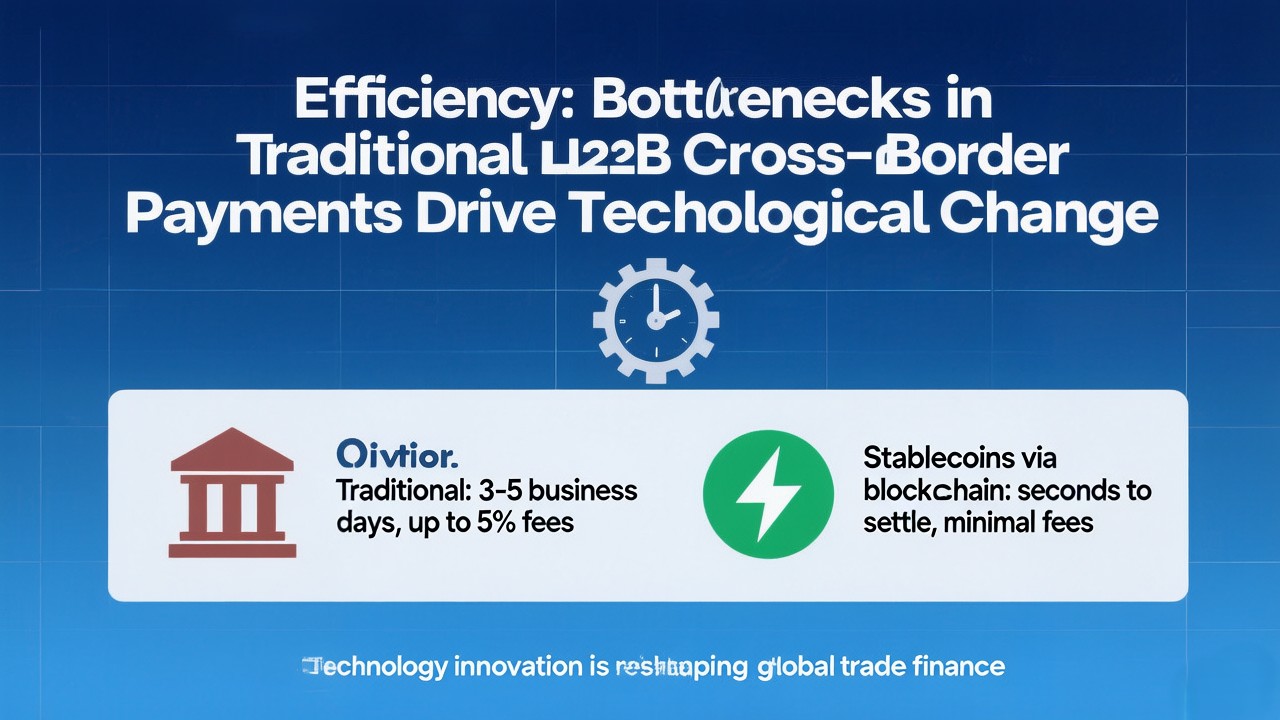
Meanwhile, the inefficiencies, high costs, and lack of transparency of the traditional cross-border payment and settlement system—centered on the SWIFT messaging system and correspondent banking networks—are becoming increasingly prominent in the digital age. World Bank data shows that in 2023, global remittances to low- and middle-income countries totaled $656 billion, a significant source of external financing for these countries. However, the global average remittance cost remains high at 6.5%, even approaching 9% in regions like sub-Saharan Africa. A single remittance often involves 3-4 intermediary banks, taking 2-5 business days, making the flow of funds difficult to track.
In practice, the market has begun to spontaneously seek alternative solutions. In Yiwu, China, the world's largest small commodity distribution center, numerous foreign trade merchants have widely accepted USDT and other US dollar stablecoins as payment tools. Buyers transfer funds via mobile wallets, and sellers can confirm receipt within minutes, completely bypassing the cumbersome bank wire transfer process. This is not merely a change in payment tools, but a miniature revolution in trade settlement paradigms. However, this also raises a key paradox: currently, approximately 90% of the global stablecoin market capitalization is still pegged to the US dollar (such as USDT and USDC). This "invisible dollarization" may, under the guise of new technologies, strengthen the network effect of the US dollar in a more efficient and pervasive way. Therefore, the real challenge for emerging markets lies in how to leverage Web3.0 technology to build a truly diversified value exchange system that does not rely on a single fiat currency.
Web3 Infrastructure: Peer-to-Peer Networks Bypass Legacy Payment Systems
The core mechanism by which Web3.0 technology promotes de-dollarization lies in its ability to build a parallel, decentralized financial infrastructure. This infrastructure, through the distributed ledger and peer-to-peer transmission protocols of blockchain, enables direct value transfer between trading counterparties, significantly reducing reliance on intermediary banks and clearinghouses. Its breakthrough lies in the finality of settlement and the openness of the network: on-chain confirmation of a transaction signifies settlement completion, and any participant meeting the protocol's standards can access it.
Decentralized finance protocols, exemplified by Mento Labs (formerly Celo), provide a vivid example. This protocol has built a blockchain ecosystem focused on mobile and inclusive finance, with its key innovation being the introduction of several "native stablecoins" pegged to fiat currencies, such as cEUR (digital euro) and cREAL (digital Brazilian real). Users can directly exchange cEUR for cREAL and other stablecoins within its built-in decentralized exchange, without needing to go through the US dollar intermediary. According to publicly available project data, its ecosystem has served over 8 million unique addresses, processing over $15 billion in transactions. Transaction fees are extremely low (typically below $0.1), there is no need for traditional Know Your Customer (KYC) processes, and it operates 24/7.
The Automated Market Maker (AMM) model based on smart contracts is the engine of such systems. It automatically executes foreign exchange transactions through algorithms and liquidity pools, achieving near real-time settlement. Users can typically complete cross-border value transfers within minutes. This contrasts sharply with traditional banking systems, which involve multiple nodes such as remittance banks, correspondent banks, intermediary banks, and receiving banks. Each node records transactions, conducts compliance reviews, and charges fees, resulting in layered costs and inefficiency. Web3.0 infrastructure essentially constructs "ultra-high-speed financial channels," allowing value to flow freely, efficiently, and at low cost on the internet, just like information.
Beyond the Dollar: Algorithmic & Diversified Stablecoin Models
To escape the trap of "invisible dollarization," the key lies in creating value stabilization tools that do not solely rely on dollar reserves. Innovators in the Web3.0 field are exploring two main directions: diversified asset reserve stablecoins and algorithmically adjusted stablecoins.
Diversified reserve stablecoins no longer rely solely on US Treasury bonds and cash as collateral, but instead expand their reserve asset basket to include other sovereign currencies (such as the euro and renminbi), gold, and even a basket of short-term government bonds. This design aims to diversify risk and reflect the reality of a multi-currency system. For example, MakerDAO's stablecoin DAI already includes a significant portion of asset classes beyond US Treasury bonds in its reserve assets. While currently still primarily dollar-denominated, its mechanism allows community voting to include a wider range of collateral, demonstrating its potential for diversification.
Algorithmic stablecoins, on the other hand, attempt to maintain price stability through supply and demand adjustment algorithms controlled by smart contracts, reducing reliance on off-chain fiat asset reserves. When the price is higher than the peg, the algorithm incentivizes increased issuance to lower the price; when the price is lower than the peg, it incentivizes buybacks or burns to raise the price. The Mento protocol's V3 upgrade plans to introduce a more complex algorithmic stabilization mechanism to enhance the volatility resistance of its native stablecoin. Although pure algorithmic stablecoin models have experienced severe volatility (such as the collapse of UST), their exploration provides experimental experience for future digital currencies pegged to more complex indices such as a basket of goods, GDP, or carbon emission rights.
Furthermore, distinguishing between bridging stablecoins and native stablecoins is crucial. Bridged stablecoins (such as USDT on most chains) are issued by cross-chain bridge protocols. Their credit relies on the original assets locked on the source chain (such as Ethereum) and the security of the bridging protocol itself, posing risks of cross-chain bridge hacking or centralized operation. Native stablecoins (such as Mento's cEUR), on the other hand, are natively issued on the target chain, directly backed by the issuer's credit and transparent reserves, resulting in a shorter and clearer credit path. For countries seeking monetary sovereignty and financial stability, supporting or participating in the creation of native stablecoins based on diversified reserves or local asset collateral represents a more autonomous technological path.
CBDC & Web3: How Nations and Markets Build a New Payment Web
In the Web3.0-driven wave of de-dollarization, central bank digital currencies (CBDCs) are not bystanders but important participants and foundation builders. CBDCs represent the extension of national sovereignty in the digital space, and their combination with Web3.0 technology may give rise to a new "multi-layered, interconnected" cross-border payment network.
China's digital yuan (e-CNY) practice is at the forefront globally. It adopts a two-tier operating system of "central bank - designated operating institution" and has already formed widespread application scenarios domestically. Its exploration in the cross-border field is particularly crucial. On the one hand, China participated in the multilateral central bank digital currency bridge (mBridge) project led by the Bank for International Settlements (BIS), jointly testing cross-border wholesale settlement using CBDC with central banks in Hong Kong, Thailand, the UAE, and other regions. On the other hand, through platforms such as "Currency Bridge" and commercialized platforms like "Digital Currency Connect," it is exploring interconnectivity with overseas payment systems. These platforms can achieve second-level exchange and settlement of various digital currencies, with the overall cost reportedly reduced to below 1%, a significant advantage over the 6%-7% of traditional SWIFT channels.
A research report by GF Securities estimates that, under a neutral expectation, the scale of cross-border digital RMB payments is expected to reach US$2.1 trillion in the next five years. The strategic positioning of the digital RMB is to provide a safe, reliable, and neutral "national-level financial infrastructure foundation." On this foundation, various stablecoins and tokenized assets can serve as "market-oriented front-end applications" for flexible innovation, meeting the diverse needs of different scenarios and users. This complementary architecture of "sovereign public blockchain + market-based applications" provides a possible framework for building a more efficient and equitable global payment ecosystem that does not rely on a single intermediary. More than 130 CBDC projects worldwide, including the EU's digital euro and Singapore's Project Ubin, are exploring similar paths to varying degrees.
Web3 Trust: From Banks to Verifiable Digital Identity
Traditional international finance relies heavily on the credit endorsement of centralized institutions (such as banks, credit rating agencies, and auditing firms). Web3.0 technology, through cryptography and distributed consensus, attempts to build a completely new trust paradigm based on verifiable data and algorithms, which is significant for weakening the "credit intermediary privilege" attached to the dollar system.
First, the immutability and transparency of blockchain itself create a new foundation of trust. All transaction records are on a publicly verifiable ledger, and any participant can independently verify the authenticity and history of transactions, greatly reducing the risk of fraud and the cost of dispute resolution in cross-border trade. This is a powerful trust-enhancing tool for emerging market countries with underdeveloped legal and credit systems.
Secondly, decentralized identity (DID) and verifiable credential (VC) systems are emerging. Users can transform their identity information, education, credit history, transaction records, etc., into encrypted, verifiable credentials, and have complete autonomy over the use and disclosure rights of this data. When conducting cross-border financial activities, users no longer need to repeatedly submit paper documents or wait for third-party verification; they only need to selectively present relevant verifiable credentials. For example, an African small business owner can directly apply for microloans from a cross-border DeFi platform based on their on-chain, unforgeable transaction records.
This new identity and credit system helps emerging economies reduce their absolute dependence on international credit rating agencies and establish localized credit assessment models based on objective, real-time on-chain data. It makes the accessibility of financial services no longer entirely dependent on traditional centralized credit records, but based on actual behavioral data of individuals or businesses, opening new avenues for broader global integration into the financial system.
Tokenizing Real Assets: Unlocking Non-Dollar Value Stores
In the long run, the deep foundation of de-dollarization lies in the diversification of global value storage tools. Web3.0 technology, through asset tokenization, is transforming assets widely present in the real economy—from real estate and commodities to intellectual property, art, and even future revenue rights—into divisible, highly liquid, and transparently traded digital assets on the blockchain. This provides global capital with a wealth of high-quality investment options and reserve assets denominated in non-dollar currencies.
"Stocks on the blockchain" is an initial attempt; for example, some platforms map US stocks like Tesla and Apple, or Hong Kong stocks like Tencent, onto the blockchain in the form of synthetic assets or custody certificates, facilitating investment for global cryptocurrency holders. However, a deeper revolution lies in the tokenization of native physical assets. For instance, a Zambian copper mine can tokenize a portion of its future revenue rights (STO) and sell it on global platforms; a famous painting can be divided into tens of thousands of ownership certificates, allowing ordinary people to participate in investment; equity in a commercial real estate property can be converted into tokens, enabling 24/7 trading and rapid settlement.
These tokenized real-economy assets (RWAs) create new "value anchors." For central banks in emerging market countries holding large amounts of US dollar foreign exchange reserves, allocating a portion of these reserves to high-liquidity, highly transparent, and high-quality RWA tokens can help diversify their over-reliance on US Treasury bonds. For businesses and individuals, these tokens provide new tools for hedging against currency depreciation and for global asset allocation. The Bank for International Settlements (BIS) clearly stated in its 2023 report that tokenization has the potential to unlock trillions of dollars in illiquid assets, profoundly changing the structure of financial markets.
Digital euros and digital yen can be directly exchanged on the blockchain, bypassing the US dollar clearing system in New York; migrant workers in Southeast Asia can remit their wages back home in stablecoins via mobile phones, with fees less than one-tenth of traditional channels; African countries' government bonds are issued to global investors in token form, with settlements completed within minutes… These scenarios are moving from experimentation to practice.
Conclusion
Technological scalability, regulatory uncertainty, privacy protection, cybersecurity, and the US's efforts to consolidate its leadership in digital finance through policies such as the GENIUS Act are all realities that must be faced. The path opened up by Web3.0 technology is clear: by rebuilding payment infrastructure, innovating currency anchoring mechanisms, interconnecting sovereign digital currencies, reconstructing trust systems, and creating diverse asset forms, it provides the world with a toolbox that transcends the traditional centralized paradigm. De-dollarization is not a goal that can be achieved overnight, but rather a process that drives the international monetary system towards a more balanced, efficient, and inclusive direction. This is no longer a futuristic vision, but a new financial practice unfolding globally, written in code and consensus.



.svg)
