
Asia Digital Payment Revolution Explosion Integration Analysis
Refined version: Analysis of Asia's digital payment revolution, from market growth to cross-border links (QRIS, UPI) and tech innovations like digital currencies, showing its economic impact and strategic insights for global businesses.
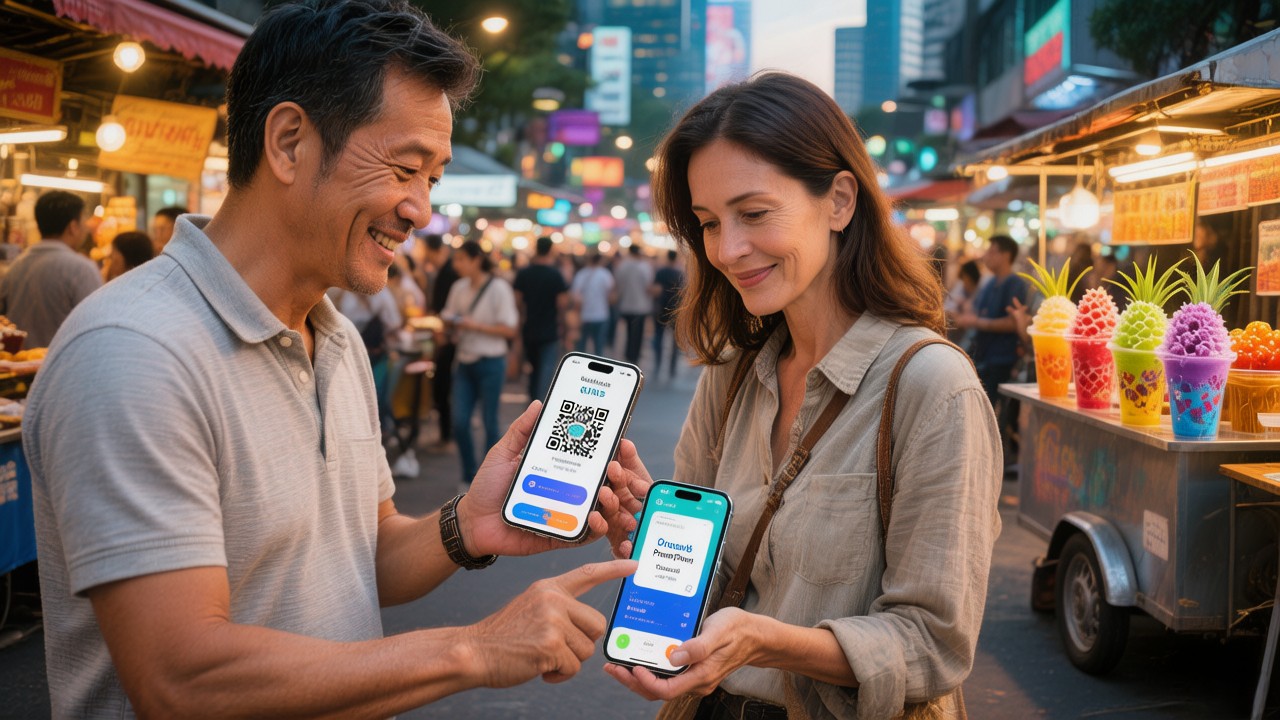
At the Siam Place night market in Bangkok, a Thai vendor is instructing a French tourist on how to use the local PromptPay wallet to scan the Indonesian QRIS QR code he has posted. This seemingly ordinary transaction is connected to a real-time clearing network built by the central banks of Thailand and Indonesia. Such scenarios are becoming increasingly common in Asia, reflecting far more than just payment convenience—it represents a profound revolution reshaping regional economic connections.
Asia, particularly Southeast Asia, is becoming the most dynamic and complex innovation testing ground for global digital payments.
I. Driving Forces: Growth Engines as Seen Through Market Data
The explosion of digital payments in Asia is primarily based on a solid demographic and structural dividend. The ASEAN region boasts over 680 million people, with Indonesia and the Philippines having a particularly high proportion of young people, forming a massive base of "digital natives." According to the latest research from Bain & Company, the total value of digital payment transactions in the six Southeast Asian countries reached US$220 billion in 2024. However, the true manifestation of structural change is seen in cases like Vietnam: According to a report by the State Bank of Vietnam, the country's active e-wallet users exceeded 52 million in 2024, a nearly 200% increase compared to three years prior, with over 35% of users coming from second- and third-tier cities. This is no longer a trend limited to a few large cities, but has penetrated into rural grocery stores and street vendors—in Bacolod, Philippines, even traditional jeepney buses are now adorned with GCash QR codes, and drivers admit that digital payments have improved their daily revenue management efficiency by approximately 40%.
II. Market Landscape: Vivid Practices of Three Paths
The Asian market exhibits diverse development paths, which is not only a theoretical division but also a vivid business reality.
The "public infrastructure" model is exemplified in India. The UPI system processed over 240.5 billion transactions in fiscal year 2025, averaging nearly 660 million transactions per day. But even more noteworthy is its depth of penetration: in fishing villages in Kerala, India, fishermen settle directly with wholesalers through UPI, reducing intermediaries and increasing prices by 15-20%. Thailand's PromptPay demonstrates another kind of success—with over 90 million registered users, meaning many Thais have multiple digital payment accounts.
The "super app" model is exemplified by Vietnam's MoMo. It not only holds a 56% share of Vietnam's e-wallet market but has also evolved into a comprehensive service platform: users can pay utility bills, buy airline tickets, and even apply for microloans through MoMo. In 2024, credit business on the MoMo platform grew by over 300% year-on-year, demonstrating the derivative value of payments as a traffic entry point.
"Cross-border connectivity" has moved from concept to daily life. Singaporean tourists using PayNow to scan PromptPay QR codes for purchases in Thailand have reduced settlement time from the traditional 2-3 days for cross-border payments to 2-3 seconds. Indonesia's QRIS standard has interoperated with Malaysia's DuitNow, and in 2024, cross-border transactions between the two countries completed via QR codes grew by over 180% year-on-year, many of which were trade settlements between small merchants.
III. The Role of Technology: Three Cutting-Edge Cases for the Future
Technology is fundamentally reshaping the payment logic, and several specific projects reveal the direction of this evolution.
Singapore's Smart Nation initiative integrates PayNow into government services: citizens can scan a QR code in the SingPass app to complete multiple services, from tax payments to CPF top-ups, reducing average processing time from 5 minutes to 30 seconds. This is not just about speed; it's about redefining how citizens interact with the government.
The "mBridge" project, a collaboration between multiple central banks, has entered a new phase. In a recent pilot, a Thai exporter shipped goods to a buyer in the UAE, settling the transaction using digital yuan through the mBridge network. The entire process was completed within 10 seconds, reducing costs by approximately 50% compared to traditional correspondent banking models. The project currently has 26 observer countries from four continents, demonstrating the international appeal of Asian solutions.
"Project Ensemble," a collaboration between Hong Kong and Thailand, is exploring asset tokenization. In a proof-of-concept trial in 2024, the two parties successfully digitized a letter of credit in trade finance, achieving automated clearing on the blockchain and reducing processing time from 5-7 days to within 24 hours.
IV. Future Focus: The Reality of Regional Network Construction
The construction of a regional payment network has entered the implementation phase. Following the full interoperability between Malaysia's DuitNow and Indonesia's QRIS in 2024, transaction volume among merchants along the border between the two countries increased by 45% quarter-on-quarter. The interconnection between China UnionPay and the Lao National Payment Network enabled Chinese tourists to use UnionPay QuickPass for QR code payments in Laos, with coverage extending from Vientiane Airport to World Heritage sites in Luang Prabang.
For companies expanding overseas, payment strategies directly impact operational efficiency. A Chinese cross-border e-commerce company, upon entering the Thai market, saw a 28% increase in local customer conversion rates compared to before integrating PromptPay; while in Vietnam, deep integration with MoMo helped increase its average order value by 15%.
V. Core Challenges: Balancing Practices in Two Countries
India's experience offers valuable insights into finding a balance between inclusiveness and sustainability. While UPI boasts massive transaction volumes, its near-free service presents challenges to its business model. India's Ministry of Finance allocated approximately 21.96 billion rupees in its 2026 fiscal year budget to support the development of digital payments, but industry estimates suggest actual demand could reach 100-150 billion rupees. The Reserve Bank of India recently allowed transaction fees for amounts exceeding a certain threshold and encouraged the application of UPI in B2B scenarios, attempting to explore a sustainable path.
The regulatory framework is also dynamically adjusting. The Indonesian central bank, by implementing the QRIS unified standard, integrated over 20 previously fragmented QR code systems into one, reducing access costs for SMEs by approximately 60%. Simultaneously, tiered licensing encouraged innovation while bringing payment institutions under a prudent regulatory framework.
VI. Strategic Implications: From Map to Compass
Understanding the Asian digital payments landscape requires shifting from a static "market map" to a dynamic "strategic compass." This requires participants to possess three core capabilities: Precise localization: When an international payment service provider entered the Malaysian market, it didn't simply replicate its solutions from other countries. Instead, it partnered with the largest local telecom operator, leveraging the latter's user base to quickly reach underserved groups served by traditional banks, acquiring 3 million users within a year.
Forward-thinking technological integration: A Thai commercial bank not only integrated with PromptPay but also developed a blockchain-based supply chain finance platform, using payment data as a basis for credit assessment of SMEs, thus keeping its non-performing loan rate below 2%.
Openness in ecosystem collaboration: In the Philippines, the mainstream e-wallet GCash has opened interfaces with platforms like Grab and Foodpanda, forming a symbiotic relationship of "payment + scenario." This has resulted in users averaging 12 transactions per month, far exceeding the industry average of 5-6.
Thailand currently has over 107 million mobile banking accounts, more than its total population. Behind this figure lies the promise of a new era—when payments become as seamless as water and electricity, they carry far more than just transactions; they represent a cyclical system of credit, data, and business opportunities.
This ongoing payment revolution in Asia is, in essence, a multifaceted experiment in financial democratization, economic integration, and technological advancement. It demonstrates not only how to complete payments faster, but also how to find the dynamic optimal solution between efficiency and inclusion, innovation and stability, localization and regional integration. Globally, this may not only be a success story for a regional market, but also a crucial reference for future digital economy development models.



.svg)
