
Visa Global Payments Reshaping with Stablecoin Infrastructure
Visa shifts from clearing to value protocol, deploying stablecoin rails on Ethereum, Solana, Stellar & Avalanche. Via Visa Direct ($1T+/yr), firms send USDC cross-border in minutes. Compliance-first with USDC/EUROC & MiCA readiness. Unlocks real-time, programmable commerce for freelancers & creators worldwide.
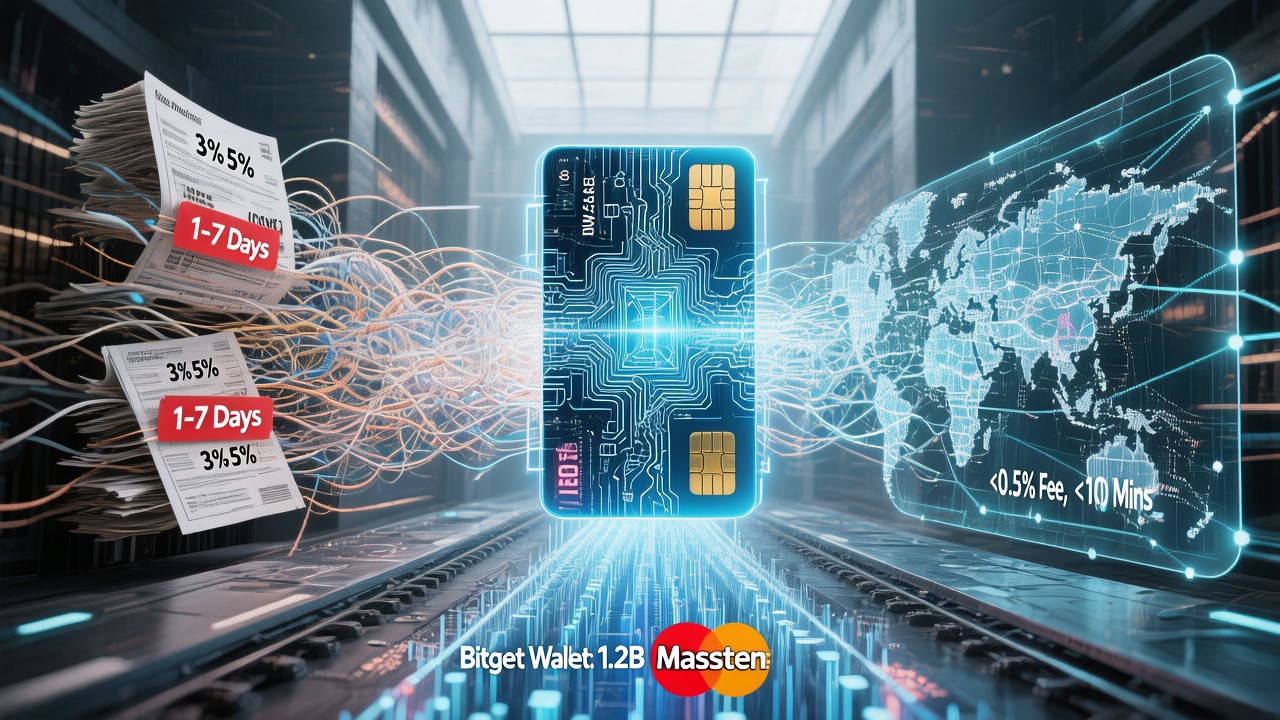
In the global payments system, Visa is undergoing a fundamental transformation from a clearing channel to a value protocol. The payments giant is no longer content with being merely a transmitter of transaction information; instead, it is committed to building a programmable, highly efficient underlying infrastructure for global value flows by systematically integrating blockchain and stablecoin technologies. Its core strategy is to upgrade itself into a key builder of next-generation financial infrastructure by creating a "compliant stablecoin corridor" connecting traditional finance and crypto assets.
I. Strategic Positioning: From Clearing Layer to Value Protocol Layer
Visa's transformation is deeply rooted in its understanding of the structural pain points in the payments market. Traditional cross-border payments, especially for small-amount, high-frequency transactions, have long been constrained by the high costs, long cycles, and lack of operational transparency inherent in correspondent banking networks. According to World Bank data, the average cost of global cross-border remittances remains as high as approximately 6%, and settlement often takes several business days. This efficiency bottleneck is particularly prominent in emerging sectors such as the creator economy and the gig economy, where participants are extremely sensitive to the immediacy and cost of fund settlement.

In its public strategic statements, Visa explicitly states that its stablecoin strategy is not intended to replace existing mature card-based payment networks, but rather focuses on resolving frictions in specific scenarios, particularly cross-border B2B and B2P (personal) payments where access to US dollars is limited. This precise positioning means that Visa is not simply embracing cryptocurrencies, but rather utilizing stablecoins as a new type of "settlement asset" within its vast global network and compliance framework, thereby expanding its service scope from information exchange to the programming and transmission of value flows themselves.
II. Infrastructure Construction: Production-Grade Deployment under a Multi-Chain Architecture
To implement its strategy, Visa has adopted a pragmatic and technology-neutral architectural approach. As of early 2026, Visa had established production-grade stablecoin settlement capabilities on multiple mainstream blockchains, including Ethereum, Solana, Stellar, and Avalanche. This multi-chain deployment is not an experiment, but a targeted design for different business scenarios. Ethereum, with its high security and decentralized characteristics, is considered the cornerstone of high-value, high-security settlements. Solana and Avalanche, known for their high throughput and low latency, are used to handle institutional-grade bulk settlements with extremely high timeliness requirements. The Stellar network, leveraging its payment infrastructure advantages in emerging markets, focuses on enterprise cross-border payment scenarios.
The key to this architecture is that Visa, as a centralized network operator, can intelligently route settlement instructions to the most suitable underlying blockchain based on transaction security, speed, and cost requirements. For example, in collaboration with Circle, Visa is participating as a core design partner in its Arc blockchain project, specifically designed for payments. This signifies Visa's move from the application layer to defining and building dedicated payment protocol layers.
III. Ecosystem Integration: Empowering the Network and Deepening Compliance
Visa's core advantage lies in its global network of merchants and financial institutions. Therefore, its implementation path emphasizes seamlessly integrating stablecoin capabilities into the existing ecosystem through strategic partnerships and product integration. In January 2026, Visa announced a partnership with stablecoin infrastructure provider BVNK to integrate stablecoin payment functionality into its Visa Direct real-time push payment platform. This move is a milestone, meaning that corporate clients can leverage Visa Direct's network, which processes over a trillion dollars annually, to send stablecoin-based cross-border payments directly to the digital wallets of individuals and businesses worldwide, achieving near-real-time 24/7 fund transfers and breaking through the operating hour limitations of traditional banking systems.
Simultaneously, Visa also provides blockchain-based settlement solutions for partner banks. For example, through the Solana blockchain, it provides USDC settlement services to institutions such as Cross River Bank in the United States, helping banks achieve near-real-time fund clearing with Visa, thereby optimizing their liquidity management and compressing the traditional T+1 or longer settlement cycle to minutes.
Of all innovations, compliance is Visa's inviolable bottom line. Its system primarily connects to strictly regulated stablecoins such as USDC and EUROC, which are fully collateralized with high-quality fiat currency assets. Facing an increasingly complex global regulatory environment (such as the EU's MiCA Act), Visa has even established a "Global Stablecoin Advisory Practice" service to proactively provide compliance solution design for bank and merchant clients. This transforms it not only into a technology provider but also into a "trusted advisor" connecting innovation and regulation, solidifying its core position within the ecosystem.
IV. Targeting the New Economy: Deconstructing the Payment and Cash Flow Paradox
Visa's strategic layout directly targets the most active yet least served sector of the digital economy—global freelancers and creators. For these groups, the speed and cost of cross-border payments directly impact their livelihoods and business expansion. Through platforms integrating Visa's stablecoin solutions, a Southeast Asian freelancer receiving payments from clients in Europe and America can reduce the timeframe from 3-5 business days and an average fee exceeding 5% for traditional wire transfers to minutes, significantly lowering costs. Even more transformative potential lies in the restructuring of cash flow. On-chain revenue streams based on smart contracts (such as subscription fees and copyright revenue sharing) are verifiable and programmable. In the future, through partnerships with DeFi protocols or fintech companies, Visa's network could enable creators to access real-time prepayment or credit services based on their predictable, on-chain verifiable future revenue streams, thereby fundamentally altering the traditional "labor-settlement-realization" cycle.
V. Vision: As the Foundational Protocol for Programmable Commerce
Visa's long-term vision is to become the foundational protocol layer supporting "programmable commerce" and the "Internet of Value." Its infrastructure may support automated settlement logic based on smart contracts in the future, such as real-time revenue sharing from virtual goods sales in the metaverse, supporting DAOs (Decentralized Autonomous Organizations) to automatically distribute incentives based on member contribution metrics, or automatically triggering payments in supply chain finance based on key events such as digital bills of lading. This marks a profound evolution of Visa's role from a "payment tool" to "payment-as-a-service" and even a "settlement protocol." It no longer merely processes payment instructions but provides an infrastructure that allows value to flow autonomously according to pre-defined, transparent, and trustworthy rules.
Conclusion: Building Bridges, Not Overthrowing Walls
Visa's transformation path provides a model for traditional financial giants in dealing with technological change: not passive disruption, but proactive integration; not building silos, but constructing bridges. By combining its compliant stablecoin settlement capabilities with its unparalleled global network, deep relationships with financial institutions, and rigorous compliance system, Visa is steadily driving a paradigm shift in payments infrastructure.
Its goal is clear—to forge an underlying system that allows value to flow globally, like data, in real time, efficiently, and reliably. In this process, Visa aims to evolve from the world's largest payments network operator into an indispensable builder of foundational protocols that define the rules of future value exchange. The success of this transformation will not only solidify its market leadership but also profoundly reshape global commerce, particularly by providing unprecedented financial inclusion and efficiency for new economic players crossing borders.


.svg)
